
How to Get Married in the Philippines
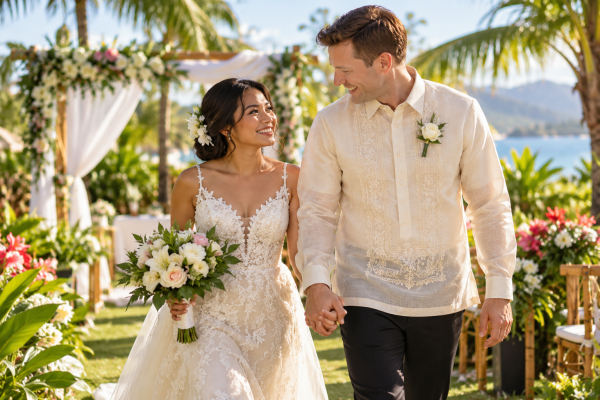
How to get married in the Philippines is a common question for U.S. citizens planning a wedding with a Filipino partner. The process typically involves confirming that both partners are legally free to marry, gathering civil documents, applying for a Philippine marriage license, and having the ceremony performed by an authorized officiant.
This guide explains the principal requirements and where to check local procedures. The requirements of the city or municipal Local Civil Registrar (LCR) and the circumstances of each couple matter, so confirm the checklist with the office where you intend to apply before scheduling travel or a ceremony.
Who Can Legally Marry in the Philippines?
Under the Philippine Family Code, both parties must generally be at least 18 years old, legally free to marry, and capable of giving consent. People aged 18–20 generally need parental consent. Those aged 21–25 must seek parental advice; lack of advice or unfavorable advice can delay license issuance. Certain applicants must also complete marriage counseling.
If either partner was previously married, additional documents proving the earlier marriage ended may be required. A divorce granted abroad is not automatically sufficient for every Filipino citizen; Philippine recognition of a foreign divorce and other complex status issues may require individual legal advice before applying.
Documents Typically Needed for a Philippine Marriage License
Local checklists vary, but couples should ask the Local Civil Registrar about these commonly requested documents:
- Valid government-issued identification and passports, especially for the foreign national.
- Birth certificates or other accepted proof of birth and identity.
- Proof of single status or capacity to marry, as applicable; local offices may request PSA civil-status records from Filipino applicants.
- Proof of termination of any prior marriage, if applicable.
- Parental consent, parental advice, or marriage-counseling documentation when applicable.
- The foreign national’s legal-capacity documentation or affidavit accepted by the local registrar.
Because cities and municipalities can use different administrative checklists, obtain their current requirements in writing where possible. Check name spellings and civil-status records before traveling.
Legal Capacity to Marry: What U.S. Citizens Should Know
Philippine Family Code Article 21 requires foreign nationals applying for a marriage license to provide evidence of legal capacity to contract marriage. For U.S. citizens, this is often handled with an Affidavit in Lieu of a Certificate of Legal Capacity to Contract Marriage, because the U.S. government does not maintain a centralized record establishing every American’s marital eligibility.
Important update: The U.S. Embassy announced that, effective in 2021, U.S. citizens are not necessarily required to have this affidavit notarized at the Embassy or Consular Agency. Acceptance of locally notarized affidavits can depend on the Philippine registrar. Confirm the exact affidavit, notarization requirements, and acceptable issuing authority with your intended LCR before making an appointment or paying for notarial services.
For current instructions, consult the U.S. Embassy’s notarial-services information and the Embassy’s notice on legal-capacity affidavits.
How to Get a Marriage License in the Philippines: Step by Step
1. Contact the Local Civil Registrar
Identify the city or municipality where the marriage-license application will be filed. Ask about the office’s required identification, documents, seminars, fees, and whether both applicants must appear in person.
2. Obtain Civil-Status and Other Supporting Documents
Gather the requested Philippine civil records and any U.S. documents. Where one applicant was divorced or widowed, verify the legal effect of that event in the Philippines and what evidence the registrar requires.
3. Complete the Application and Required Counseling
The Family Code provides for separate sworn marriage-license applications by the parties. For some applicants, parental consent or advice and a marriage-counseling certificate are also necessary.
4. Allow Time for the Posting Period
Ordinarily, the registrar posts the application notice for 10 consecutive days, and issues the license after the statutory publication period, subject to applicable requirements or impediments. Do not assume the license can be obtained on the day you arrive.
5. Hold the Wedding Within the License’s Validity Period
A Philippine marriage license is generally valid for 120 days from issuance throughout the Philippines. The marriage must be performed by a person authorized to solemnize marriages, with the required formalities. There are narrow legal exceptions to the license requirement; do not assume one applies without verifying it.
6. Obtain Your Registered Marriage Certificate
After the ceremony, the marriage is registered with the proper local civil registrar. Obtain the appropriate certified marriage records. If you intend to apply for a U.S. spouse immigrant visa, the U.S. Department of State’s Philippines document guidance indicates that a PSA-issued marriage certificate is required for visa purposes.
What About a Civil Wedding Versus a Church Wedding?
Both civil and religious marriages can be valid if Philippine legal requirements are met and the officiant is authorized. Churches and other religious institutions may have additional preparations of their own, separate from the legal marriage-license requirements. Ask your chosen officiant and local registrar about scheduling and documentation.
After the Wedding: Bringing Your Filipino Spouse to the United States
Marrying in the Philippines does not, by itself, grant a Filipino spouse a U.S. visa or permission to live in America. For a qualifying married couple, the usual immigration route is the CR-1 Spouse Visa or IR-1 classification, based on the marriage’s duration at admission. This normally begins with a U.S. citizen filing Form I-130 and later proceeds through immigrant-visa processing.
If you are not married yet and plan to marry in the United States, explore our professional K-1 Fiancée Visa, K1 Visa, and Fiance Visa preparation services instead. Our Marriage Visa USA guide and CR-1 Visa Philippines guide explain the immigration choices in more detail.
Planning Your Life Together in America?
Filipina Fiancée Visa Service has over 25 years of experience preparing immigration petition packages. We professionally prepare and organize your paperwork, review supporting information, and assist with filing and the stages that follow.
Frequently Asked Questions
How many days should we allow before our wedding?
Allow time to gather documents, apply, complete any applicable counseling, and finish the statutory 10-day posting process. Actual appointment availability and local processing may add time.
Can a U.S. citizen get married in the Philippines while visiting?
Yes, subject to Philippine marriage requirements and the local registrar’s accepted documents. A U.S. passport alone generally does not replace the required marriage-license documents.
Is a wedding in the Philippines automatically recognized for U.S. immigration?
A valid marriage can form the basis of a U.S. spousal petition, but the couple must still satisfy U.S. immigration requirements and document the marriage appropriately. The visa process is separate from the wedding.
Official Sources and Final Planning Checklist
Review the Philippine Family Code, the U.S. Department of State guidance on marriage abroad, and the State Department’s Philippines civil-documents instructions. Verify current municipal procedures before travel; requirements can differ with age, marital history, nationality, and location.
Filipina Fiancée Visa Service is a private document preparation company, not a government agency or law firm. We do not provide legal representation. For questions about disputed marital status, recognition of divorce, or other complex Philippine law issues, seek advice from an appropriately qualified professional.