
The Path to US Citizenship Through Marriage
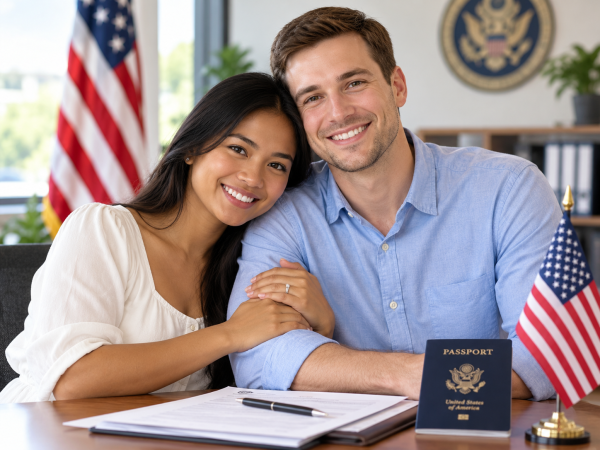
For many couples, the journey from a K-1 fiancée visa or CR-1 spouse visa to a U.S. passport can seem confusing. One of the most common misunderstandings is that marrying a U.S. citizen automatically makes the foreign spouse a U.S. citizen. It does not.
The usual path to U.S. citizenship through marriage involves becoming a lawful permanent resident, maintaining that status, meeting eligibility requirements, and applying for naturalization. Here is how the stages fit together—and how Filipina Fiancée Visa Service can help with the paperwork along the way.
Step 1: Enter the United States Through the Appropriate Visa Process
The first steps depend on whether the couple is already married.
K-1 Fiancée Visa: Marry After Arrival
An eligible foreign fiancée who enters with a K-1 visa must marry the U.S. citizen petitioner within 90 days of entering the country. After marriage, she generally applies to become a lawful permanent resident through Adjustment of Status, commonly called AOS.
Learn about FFV’s K-1 Fiancée Visa preparation service and our K-1 visa Philippines guide.
CR-1 or IR-1 Spouse Visa: Permanent Residence at Entry
For couples already married, the CR-1 or IR-1 immigrant visa route allows an eligible spouse to become a lawful permanent resident when admitted to the United States. Unlike the K-1 route, a spouse admitted on a CR-1 or IR-1 visa ordinarily does not need to file a separate Adjustment of Status application after arrival.
Explore our CR-1 Spouse Visa service or read the CR-1 visa Philippines guide.
Step 2: Receive the Green Card
A green card is evidence of lawful permanent resident status. It is not a U.S. citizenship document. A permanent resident may generally live and work in the United States, subject to the laws governing that status.
For a K-1 entrant, permanent residence generally begins when USCIS approves the Adjustment of Status application. For a CR-1 or IR-1 immigrant visa holder, permanent residence generally begins upon admission with that immigrant visa. These dates matter when calculating later naturalization eligibility.
Step 3: Remove Conditions if Your Green Card Is Conditional
If the marriage was less than two years old on the date permanent residence was granted, the foreign spouse generally receives conditional permanent residence for two years. This can occur whether residence was obtained through Adjustment of Status or a CR-1 visa.
Most married couples filing jointly must submit Form I-751, Petition to Remove Conditions on Residence, during the 90-day period before the conditional resident status expires. They provide evidence showing their marriage is genuine. An interview is not automatically required in every case.
FFV also prepares Removal of Conditions packages and provides guidance on documenting the couple’s life together.
Step 4: Determine When You Can Apply for U.S. Citizenship Through Marriage
The usual naturalization rule is five years as a lawful permanent resident. However, certain spouses of U.S. citizens may qualify under a three-year rule.
To generally qualify under the three-year marriage provision, an applicant must meet requirements including:
- Being at least 18 years old at filing.
- Having been a lawful permanent resident for the required three-year period (subject to the permitted early-filing provision).
- Living in marital union with the same U.S. citizen spouse for at least the preceding three years.
- Having a spouse who has been a U.S. citizen for at least those three years.
- Meeting continuous residence, physical presence, good moral character, and other naturalization requirements.
Important: The three years are not simply counted from the wedding date or the date the fiancée arrived in America. The permanent-resident date and the citizenship and marital-union requirements must be considered together.
Some applicants may file Form N-400 as early as 90 days before completing the required continuous-residence period, provided they satisfy the other applicable eligibility rules. Early filing does not waive the other three-year marriage requirements. See the USCIS Form N-400 instructions for current requirements.
Step 5: Prepare and Submit Form N-400
The citizenship application is Form N-400, Application for Naturalization. USCIS may require information about trips outside the United States, addresses, employment, marital history, and other eligibility matters. Applicants relying on marriage to a U.S. citizen should be prepared to document that qualifying relationship and shared life.
Careful preparation matters because inconsistencies or missing records can create avoidable delays. FFV offers naturalization document preparation services and can help clients organize their application materials and filing instructions.
Step 6: Attend the Naturalization Interview and Tests
USCIS generally schedules a naturalization interview. The applicant may be tested on English and U.S. civics, unless a qualifying exception or accommodation applies. The officer also reviews the application and eligibility. Applicants should study using current USCIS citizenship resources.
Passing the interview and tests does not, by itself, complete citizenship. USCIS must approve the application, and most applicants then take the Oath of Allegiance.
Step 7: Take the Oath and Become a U.S. Citizen
For most applicants, U.S. citizenship begins when they take the Oath of Allegiance at a naturalization ceremony. Once naturalized, they may apply for a U.S. passport and enjoy the rights and responsibilities of citizenship.
Citizenship can also create new possibilities for petitioning eligible family members, subject to the immigration rules that apply to each relative.
Frequently Asked Questions
Does marrying a U.S. citizen make someone a citizen automatically?
No. Marriage can provide a basis for immigration benefits, but it does not itself confer permanent residence or U.S. citizenship.
Can someone apply for citizenship while Form I-751 is pending?
Yes. An eligible conditional resident may be able to file Form N-400 while the I-751 remains pending. USCIS must resolve the conditions-on-residence issue before naturalization can be approved.
What happens if the couple has not met the three-year marriage requirements?
The applicant may need to wait or qualify under the ordinary five-year permanent-resident rule. Eligibility depends on the person’s full immigration history and circumstances.
Personal Immigration Preparation Help From Start to Finish
For over 25 years, Filipina Fiancée Visa Service has helped couples prepare immigration paperwork at important stages of their lives together. From bringing a fiancée or spouse to America to preparing for permanent residence and citizenship, our focus is professional preparation, document review, and personal guidance.
K-1 Fiancée Visa — Professional petition preparation and assistance with filing your fiancée visa case.
CR-1 Spouse Visa — Assistance preparing your marriage-based immigration petition.
Adjustment of Status — Help preparing a permanent residence application after a qualifying entry and marriage.
Removal of Conditions — Preparation assistance for your Form I-751 package.
When you’re ready for naturalization, contact FFV to ask about our U.S. citizenship application preparation service at (702) 426-4503.
This article provides general information rather than legal advice. Eligibility and immigration procedures depend on the individual case. Filipina Fiancée Visa Service provides document preparation assistance and is not a law firm or government agency.