
Filipino Wedding Traditions
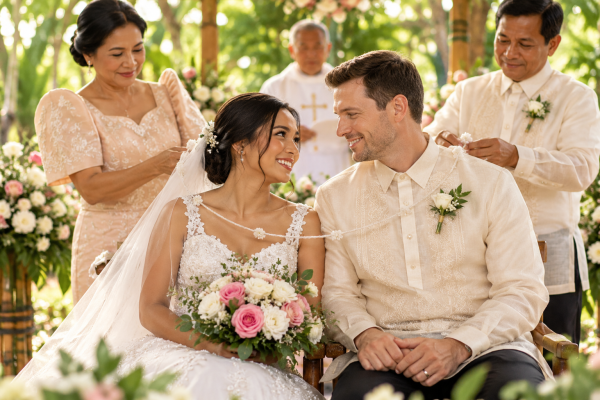
Filipino wedding traditions bring families, faith, and meaningful symbols together in a celebration of marriage. A wedding in the Philippines is often called a kasalan, and many ceremonies combine long-standing Filipino customs with the couple’s religious beliefs and personal preferences.
Whether you’re planning a wedding with your Filipina partner or simply learning about her culture, understanding these traditions can make the celebration more meaningful. Not every couple follows every custom, and practices vary by family, region, and faith.
Traditional Filipino Wedding Attire
Many brides choose an elegant white wedding gown, while some incorporate traditional Filipiniana details into their attire. Grooms may wear a Barong Tagalog, the formal embroidered shirt frequently made from lightweight materials such as piña or jusi fabric. A Western-style suit is also common.
Members of the wedding party may wear coordinating attire, sometimes incorporating barong or Filipiniana styles. The clothing is one way couples celebrate both their personal tastes and Filipino heritage.
Family and Principal Sponsors at Filipino Weddings
One of the most distinctive features of many Filipino weddings is the involvement of family and principal sponsors, often called ninong and ninang. These respected relatives or friends serve as witnesses and may offer encouragement and guidance to the newly married couple.
Other participants, known as secondary sponsors, may assist with the veil, cord, and candles. Their presence emphasizes that marriage connects not only two people but also their families and communities.
The Wedding Processional
The procession introduces the members of the wedding party, family members, and sponsors before the bride enters. The order varies with the ceremony and the couple’s preferences. Some brides walk with one or both parents, while others are accompanied by another important family member.
The couple then takes part in a ceremony that may include vows, blessings, and the exchange of rings.
Meaningful Filipino Wedding Ceremonies
Several symbolic customs are especially familiar at Filipino weddings, including Catholic ceremonies. Couples may include all or only some of these traditions.
The Veil Ceremony
A ceremonial veil is gently placed over the couple’s shoulders or heads by designated sponsors. It represents their unity and the beginning of a shared life.
The Cord Ceremony
A cord, sometimes arranged in a figure-eight shape, is placed around the couple. It symbolizes an enduring bond, loyalty, and commitment to one another.
The Coin Ceremony (Arras)
Thirteen coins are traditionally presented and blessed. The exchange represents the couple’s commitment to supporting one another and sharing responsibility for their future household.
The Ring Exchange
The wedding rings represent the promises made by the bride and groom. In many religious ceremonies, they are blessed before the couple exchanges them.
Candles and Other Traditions
Some ceremonies also include unity candles, readings, music, and prayers. Couples frequently adapt these customs to reflect their own family traditions and personal beliefs.
Filipino Wedding Reception Traditions
After the ceremony, the reception may feature a lively combination of family introductions, music, dancing, speeches, and food. Guests often participate in games or traditions arranged by the couple and their families.
The wedding cake and first dance are popular highlights. Some couples also choose symbolic activities such as releasing doves or presenting gifts to parents, while others prefer a simpler celebration.
The Role of Family in a Filipino Marriage
For many couples, the family-centered nature of a Filipino wedding is one of its most memorable qualities. Parents, siblings, relatives, and sponsors can play important roles before, during, and after the celebration.
If you’re an American planning to marry a Filipina, it can be helpful to discuss family expectations early: where to hold the ceremony, whom to invite, and how to honor traditions important to each of you. Our Courtship in the Philippines article explores other customs that may be part of your relationship.
Planning Your Marriage and Future in the United States
Some couples choose to marry in the Philippines; others prefer to hold their wedding in the United States. That decision can affect which immigration process fits their plans.
Planning to marry in America? If you’re not yet married, a K-1 Fiancée Visa may allow an eligible foreign fiancée to enter the United States and marry her U.S. citizen petitioner within 90 days of arrival.
Already married in the Philippines? A CR-1 Spouse Visa or IR-1 immigrant visa is generally the route for an eligible spouse immigrating after marriage.
For a comparison of both options, read our K-1 fiancée visa vs. spouse visa guide. Our getting married in the Philippines article also introduces wedding preparations.
When You’re Ready to Begin Your Life Together
For over 25 years, Filipina Fiancée Visa Service has helped couples prepare immigration petition paperwork, review supporting documents, and navigate the process with personal guidance. Whether you’re engaged or already married, we’re here to help you take the next step.
K-1 Fiancée Visa Help CR-1 Spouse Visa Help
Not sure which option fits? Explore our Marriage Visa USA guide or call (702) 426-4503 during our weekday office hours.
The Heart of Filipino Wedding Traditions
At its heart, a Filipino wedding celebrates love, commitment, family, and community. The details may vary, but the significance remains: two people beginning a shared future with the support of those closest to them.
Understanding the traditions behind a Filipino wedding is a meaningful way to honor your partner’s heritage and create a celebration that reflects both of you.
Disclaimer: Filipina Fiancée Visa Service is a private immigration document preparation service and is not affiliated with any government agency. We are not a law firm and do not provide legal advice or legal representation.